Table of contents
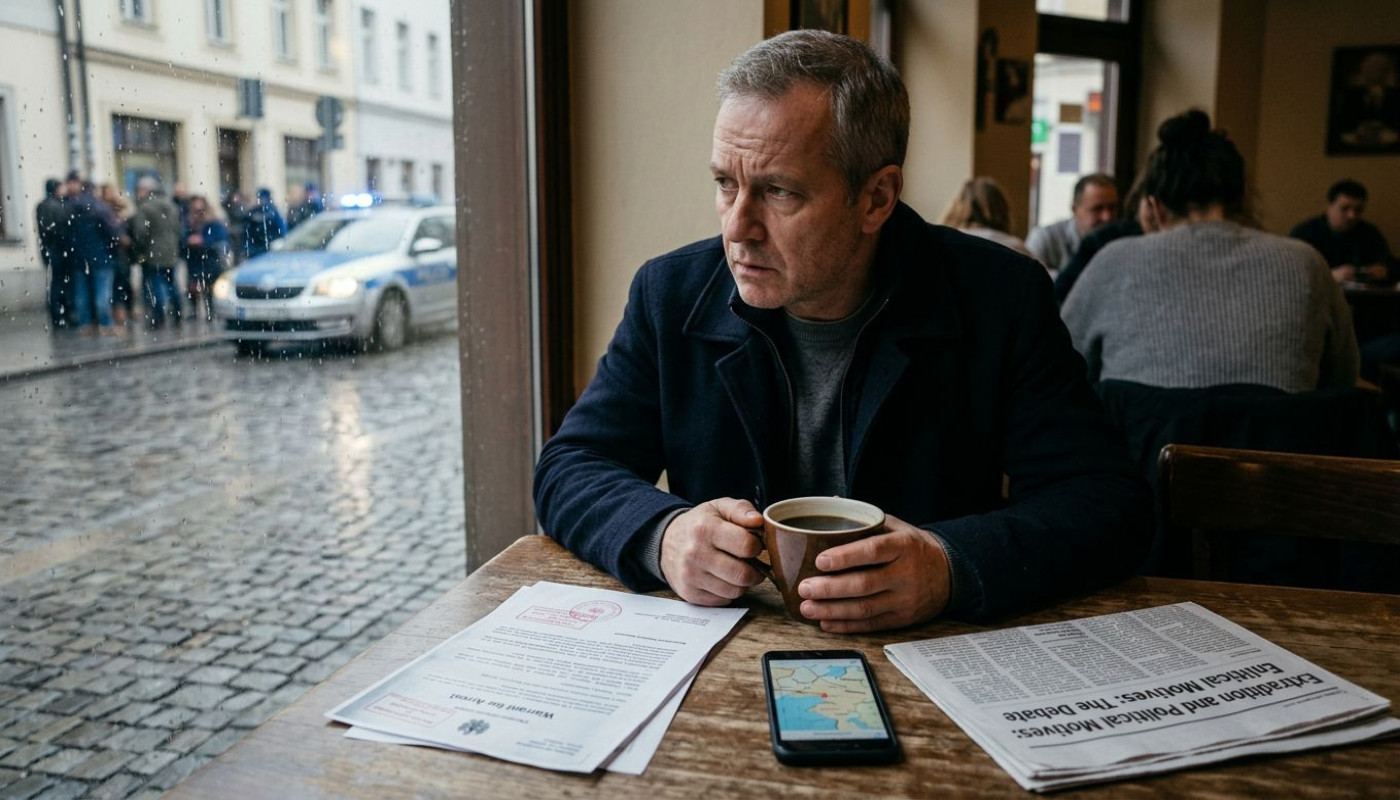
From Julian Assange’s years-long court battle to recurring disputes over Russian opposition figures and businesspeople, extradition has become one of the most politically charged tools in international law, and not only for authoritarian states. Behind the formal language of treaties and arrest warrants sit real risks: prison conditions, media pressure, diplomatic bargaining, and, at times, a request designed less to prosecute a crime than to neutralise a rival. So when a country asks for someone to be surrendered, how can courts tell whether justice is being served, or politics is driving the file?
When a warrant looks legal, but isn’t
How do you spot a political case in legal clothing? It rarely arrives with a label. In most extradition systems, the requesting state frames its allegations as ordinary crimes: fraud, corruption, “extremism”, terrorism-related offences, or national security violations, and the paperwork can appear immaculate. Yet experienced judges and practitioners look beyond the formatting to patterns, timing, and context, because political motivations often show up in the margins rather than the headline charge.
One recurring red flag is the chronology. If allegations surface immediately after a public clash with power, after a defection, after a change of allegiance, or during an election cycle, the coincidence matters. Another warning sign is disproportionality: charges that carry unusually heavy penalties, sweeping conspiracy theories, or a sudden escalation from administrative issues to felonies. Interpol itself has acknowledged for years that its channels can be abused, which is why it applies Article 3 of its Constitution, prohibiting activity “of a political, military, religious or racial character”; the creation and expansion of Interpol’s Notices and Diffusions Task Force, and the growing number of requests screened, reflect that institutional anxiety, even if critics argue that safeguards still vary in effectiveness.
Courts also weigh the requesting state’s broader track record. The European Court of Human Rights has repeatedly insisted that extradition cannot proceed where there is a “real risk” of treatment contrary to Article 3 of the European Convention on Human Rights, notably torture or inhuman or degrading treatment. That test is highly fact-based: the quality of detention facilities, documented prison overcrowding, access to medical care, and whether a person is likely to be held in pre-trial detention for long periods. In practice, the politics and the prison issue often intersect, because politically sensitive defendants can face harsher regimes, isolation, or pre-trial detention used as punishment.
Then comes the fairness of the trial. The ECHR’s case law does not treat every due-process concern as an automatic stop, but it does recognise that a “flagrant denial of justice” can bar extradition. That is a high threshold, and critics say it sets the bar too far from everyday realities of politicised courts. Still, defence teams increasingly bring granular evidence: statistics on acquittal rates in certain categories of cases, reports by UN experts and reputable NGOs, and examples of similar defendants facing procedural shortcuts. In a world where legal forms travel faster than truth, the question is not whether documents exist, but whether the process they describe can be trusted.
The quiet power of “dual criminality”
Dual criminality sounds technical, yet it can decide everything. The principle, common in extradition treaties and the European Arrest Warrant framework, requires that the alleged conduct be a crime in both the requesting and requested states. That seems straightforward until you remember how elastic modern offences have become, and how governments can repackage political conflicts as ordinary criminality.
Consider how broadly some jurisdictions define “extremism”, “disinformation”, insult to state institutions, or participation in “undesirable” organisations. A requesting state may describe the conduct as incitement or recruitment, while the requested state sees it as protected speech, journalism, or peaceful assembly. Even in financial cases, dual criminality can bite: what one country calls “fraud” may elsewhere look like a civil dispute, a corporate governance fight, or a contested bankruptcy. The defence often focuses on the underlying facts, not the legal labels, because courts are meant to assess the “conduct” rather than accept the requesting state’s characterisation at face value.
The European Arrest Warrant complicates this further. For a list of 32 categories of offences, the EAW can dispense with dual criminality if the offence is punishable in the issuing state by at least three years, a design aimed at speed and mutual trust inside the EU. That trust is now under strain. EU courts have had to confront whether systemic deficiencies in the rule of law, including judicial independence concerns, can justify refusing surrender. The Court of Justice of the European Union has developed a two-step test in cases involving judicial independence: first, whether there is a real risk of a breach in the issuing state’s judiciary, and second, whether that risk would affect the individual in question. It is a legal effort to keep cooperation alive without turning a blind eye.
Outside the EU, mutual legal assistance and bilateral treaties often contain their own carve-outs: “political offence” exceptions, non-extradition of nationals, and clauses on military offences. Yet the political offence exception has narrowed over decades, especially for terrorism-related conduct, and governments have become adept at fitting dissent into categories that travel well across borders. That is why defence strategy increasingly relies on evidentiary work: mapping the public profile of the accused, the media narratives around the case, and the pattern of prosecutions against similar figures, then connecting those dots to the treaty tests the court must apply.
Human rights are the real battleground
The most decisive fights in modern extradition are often not about guilt, but about what happens after surrender. Defence lawyers build cases around detention conditions, medical risks, and the fairness of the receiving system, because those arguments can be assessed by foreign courts without turning the hearing into a full trial on the merits. The result is that human rights standards, more than diplomatic statements, become the battleground where politics is tested.
Prison conditions are not an abstract concern. The Council of Europe’s anti-torture committee, the CPT, has for decades documented overcrowding, violence, and inadequate healthcare in various member states’ facilities, and domestic courts regularly cite such reports when analysing risk. The UN’s Mandela Rules, while not binding law, supply an internationally recognised benchmark for treatment of prisoners, and medical evidence can be pivotal where a defendant’s health is fragile. In high-profile cases, assurances from the requesting state may be offered: promises about a particular prison, access to doctors, or non-application of certain regimes. Courts must then decide whether assurances are specific, reliable, and enforceable, or whether they are diplomatic paper over a systemic problem.
Fair-trial concerns can be even more complex. A requesting state may formally guarantee access to counsel and public hearings, yet the real pressure sits elsewhere: pre-trial detention used to extract confessions, limits on access to case files, witness intimidation, or the use of classified evidence that the defence cannot meaningfully challenge. The “flagrant denial of justice” test means defence teams often have to show an extreme risk, but they can do so through a careful dossier: prior judgments by international courts, documented patterns of prosecutorial dominance, and the individual’s profile, especially if they belong to an opposition movement or a targeted business sector.
This is also where politics can hide in plain sight. If the person sought is a journalist, activist, whistleblower, or someone involved in a dispute with powerful state-linked interests, the line between criminal prosecution and political retaliation can blur, and the risk of mistreatment rises. For readers trying to understand the stakes, it helps to remember the asymmetry: the requesting state has the apparatus of police, prosecutors, and diplomatic channels, while the requested state’s court must decide with imperfect information, under time pressure, and with consequences that can be irreversible.
In these cases, specialised counsel matters, because the work is less about rhetoric than about building a record that can survive appeals. Those seeking guidance often turn to Адвокаты по вопросам экстрадиции when the central question is how to challenge a surrender request using treaty provisions, human-rights law, and evidence that courts recognise. The practical task is to translate fear and suspicion into admissible material: documents, expert opinions, medical reports, and verifiable country information, presented in a way that fits the legal tests judges must apply.
So who keeps the system honest?
Extradition sits at the intersection of trust and scepticism. The entire architecture assumes cooperation: states promise to prosecute crime, and partners promise to surrender suspects. If every request were treated as propaganda, the system would collapse; if every request were treated as neutral, the system would become a tool for the powerful. The safeguards that keep it honest are therefore procedural, not political, and they depend on institutions that are willing to ask uncomfortable questions.
Courts are the first line. They can demand detailed evidence, scrutinise assurances, and refuse surrender when risk thresholds are met. But courts are constrained: they typically do not decide innocence, they work within treaty frameworks, and they often give deference to “mutual trust” principles, especially within integrated regions like the EU. That is why transparency mechanisms matter. Interpol’s reforms, including greater oversight and the possibility for individuals to challenge data through the Commission for the Control of Interpol’s Files, are steps toward accountability, but critics still warn that remedies can be slow, and reputational damage can occur long before a correction arrives.
Governments also play a role, sometimes quietly. Many systems allow the executive to take the final decision after a court approves extradition, particularly where diplomatic assurances and foreign policy are involved. That power can protect individuals in sensitive cases, but it can also be used to trade away protections. In liberal democracies, parliamentary scrutiny and a free press can expose questionable surrenders, yet media attention is uneven, and many cases are decided in relative silence, involving ordinary people with limited resources.
The final safeguard is time, ironically. Appeals, interim measures, and urgent applications to international courts can pause a handover, and that pause can be the difference between safety and harm. Yet time is expensive. Legal fees, translation costs, expert evidence, and the personal toll of prolonged uncertainty create a system where resources shape outcomes. If political misuse is a real risk, then equal access to competent defence is not a luxury; it is part of the rule-of-law infrastructure.
What to do if extradition looms
Act quickly, and budget realistically. An extradition file moves fast once detention begins, and the strongest arguments, medical evidence, country reports, and witness material need time to assemble. Ask early about legal aid, translation costs, and the price of expert opinions; in some jurisdictions, interim measures and appeals can also add significant expense, so planning is protection.
Similar

Rights At Risk: Hidden Challenges In Extradition Hearings

Myanmar coup: Detained leader Aung San Kyi faces fresh charges
